South Coast NSW History Story
TUROSS HEAD
From 1836, John Hawdon - a settler from England with an agricultural background and who had successfully petitioned Governor Sir Richard Bourke to have a survey undertaken of the Broulee area - squatted on a huge piece of land south of the Moruya River over what today includes Congo, Bergalia, Tuross Head and Bodalla.
In 1848, he was able to obtain a Crown Lease over 30,000 acres of land in the area. The land around Bodalla was later to become part of Thomas Suttcliff Mort’s Bodalla Estate, with Hawdon then retaining land around Tuross Head.
In 1870 Patrick Mylott, who had worked for T.S. Mort on the Bodalla Estate (and was the father of Eva Mylott, a world-renowned contralto and opera singer), acquired the 875-acre Tuross peninsula which then was then predominantly being used for farming.
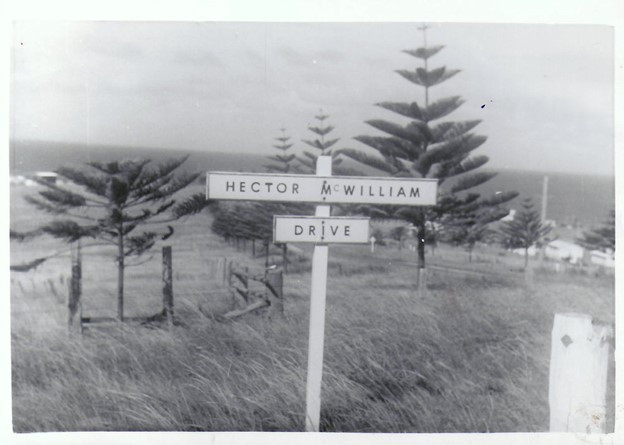
In 1920 Hector McWilliam, a Wagga Wagga real estate agent, holidayed at Tuross Head and was so impressed with the area he proceeded to negotiate the purchase of all of the headland area then owned by Patrick’s widow, Mary.
He planned a subdivision for holiday houses which he promoted to potential buyers in Canberra and Sydney. He also ran Tuross House, which had been built by Patrick Mylott, as his own home and as a boarding house.
The streets in his subdivision were mostly named after British naval victories and military heroes. McWilliam also planted the Norfolk Island Pines that are now an iconic feature of Tuross Head.
Up until World War II, holiday makers and fishermen provided the economic base to the town, which in 1940 only had 40 residents.
Since then, facilitated by the growth of motor vehicle ownership, the number of holiday makers visiting the town and the number of permanent residents has steadily grown. Community facilities have also developed. Today, the township has a permanent population of around 2,250, with the town’s economy remaining predominantly tourist- and fisherman-based.