South Coast NSW History Story
A 1960s Summer Job at Narooma Fish Cannery
A 1960s Summer Job at Narooma Fish Cannery
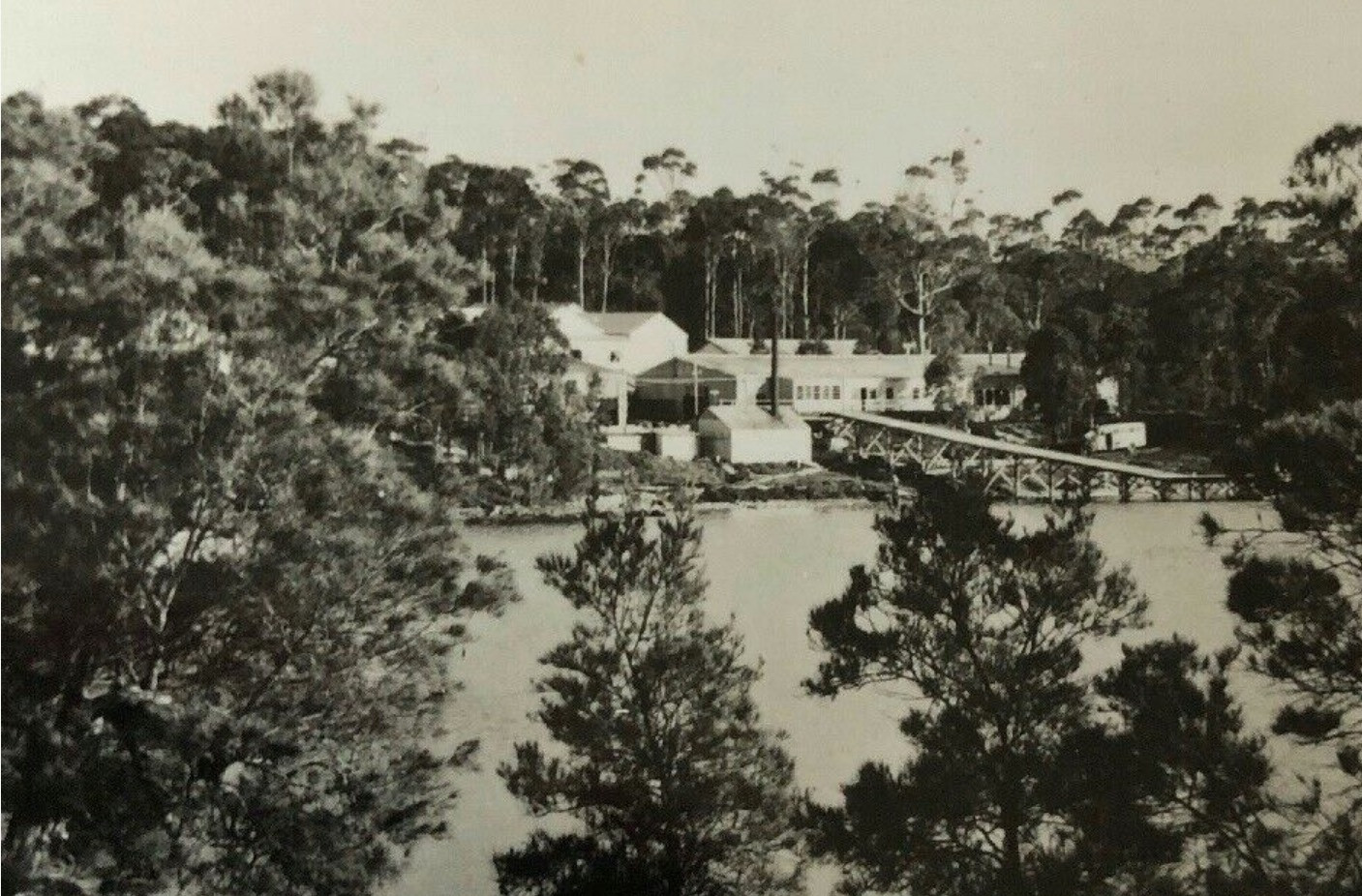
The first fish cannery on the South Coast was opened in Narooma in 1938. It had the capacity to produce eight million 12oz cans of fish per year from a single shift of workers.
Forty fishermen supplied the cannery – at various times with salmon, barracouta, tuna, mackerel, scad and pilchards. Its tinned fish was mainly marketed under the Greenseas and Nar-Roo-Ma brands.
The Narooma fish cannery operated until 1960. For a time after this, some fish were supplied by local commercial fishermen, were snap frozen and were then trucked to the fish cannery in Eden.
As a teenager, Wally Eliaschewsky had a summer-vacation job at the cannery. This is how he remembers it:
Long after the cans had stopped rolling, we worked at the Narooma fish cannery.
As very young teenagers, we were recruited by "H" during the summer months to “hang” tuna fresh from the boats. The fish were transported by truck to the now-defunct cannery, located in the area of Gem Crescent on the bank of the southern reach of Fosters Bay.
Our job was to slide the freshly caught tuna down and along a long, wooden, movable slide towards the freezer door.
Then came the hard, dirty work.
We would lift each tuna by the tail and hang it from long lengths of 2x4 timber, with two four-inch nails evenly spaced along each length. One by one, the fish were hung until the entire freezer was packed with tuna.
Then the doors were closed, and the whole lot was left to snap-freeze.
Some of the excess fish were slid into brine tanks. Because of the high salt content, the water did not freeze, but it was incredibly cold. When it came time to extract the fish, it was a quick movement, even with our gloved hands. The issued gloves were frequently replaced because the frozen tails would cut through the thumb-and-forefinger area with surprising regularity.
Gloves and rubber boots were virtually the only protective clothing we were supplied.
We were young, but the work was real. The fish were heavy, the days were long, and the smell of the cannery stayed with you. It is hard to imagine teenagers now doing that kind of work, but at the time it was simply what we did.
It was a summer job dependent on the movement of tuna and the catch of the day. "H" would pick us up in his old Ute. If you were lucky, you scored a seat in the front; otherwise, you clambered into the back, often alongside ropes and various odd pieces of machinery that accompanied us on the short trip to the cannery.
There was no formal roster. It was simply a case of "H" honking the horn, and each of us racing out from our individual homes to join that day's crew.
Once the tuna had frozen solid, the next process was to unhook the now rock-hard fish and slide them, primarily along the concrete floor, although some wooden slides were also used, towards the larger freezer. There we stacked them like wood in a woodshed.
"H" would regularly call out “Slide, slide! Don’t drop the fish on the concrete or you’ll cause cracking or chipping of the solid floor.”
The warning applied to the brine-tank fish as well.
There was also a constant, slight smell of ammonia gas in the area. Ammonia was the primary freezing agent, using what would be considered an antiquated refrigeration system today. At the time, we thought little of it. It was simply part of the smell of the cannery.
We were allowed a short break for “smoko”. We could have a coffee from the weighbridge office, because there was still parts of the old canning system operating—or at least sitting there unused—in another section of the facility.
There were new, empty cans and various labels for different types of tuna and salmon. We explored the place, curious about all the old equipment and remnants of the cannery's working life. Sometimes we would sit on the end of the big jetty for a short break before returning to finish our shift.
Payday was Friday. We were given a cheque, which we then had to take to the bank to deposit. "H" would regularly say to us “The job might smell, but the money doesn’t.”
He was right. It was more than enough for us, and we felt cashed-up compared with the other kids, few of whom had regular summer jobs.
The money made the hard work worthwhile.
But the smell was another matter.
A shower and a good scrub after each day were essential because we all smelt of fish. We had become accustomed to it, but our noses did not notice what everyone else could. Our mothers certainly noticed!
We were quickly told, in no uncertain terms, whether or not we had done a good job in the shower before we were allowed out for the evening.
Once we had scrubbed away the last traces of the cannery, we could get on with being teenagers again — heading off to enjoy the evening at Brown's Carnival or the skating rink.
For a few hours, the fish, the freezers, the brine tanks and the smell of ammonia could all be forgotten.
Then, the next day, if "H" sounded the horn, we'd race out of our homes again.
The cannery was waiting.